From Reader’s Digest
Summary
Or, Answer the following questions 5.a-b and 6.a-p. Introductory Part
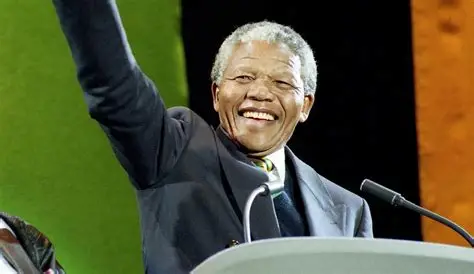
Nelson Mandela is a great and a ‘mythic’ name in the twentieth century politics of reformation in the world. He was an African politician who gave freedom and justice to the African Black people. This interview with National Mandela published in the ‘Reader’s Digest’ is extracted here. Before interview, there is introductory part that can help to know background of the person and his/her real life. Such biography is useful for the readers. It describes the Mandela’s struggle for the people’s rights, justice, inclusive democracy and the end of racial discrimination (5.b).
Mandela was affectionate and people would call him ‘Madiba’; means wise and warm father. He was the son of a member of royal house of the Thembu tribe. He studied in the British school and became a lawyer and joined the African National Congress and organized an armed wig. So, he was arrested and sent him life imprisonment. Because of the world pressure, he was released in 1990 after 27 years imprisonment. He became President of South Africa in 1994. He passed away in January, 2014. The world vowed on his demise (5.a).
Interview Part (6. a-p)
This interview was taken him in Mandela Foundation in Cape Town. He is called Madiba because he is regarded as the affectionate father of all Africans. He gave rights and justice to the South Africans, those who were Black or Negroes deprived of all rights in comparison to the Whites. The Black were poor, backwards and marginalized but he wanted to make them ‘Black Englishmen’ those who were advanced, educated blacks (a,b). He says that the path of reconciliation guarantees peace, progress and prosperity of the society. It enhances national unity (c). He has different view about disease. If the ill people are isolated, it kills people more than the disease itself. The suffering people should get support, not refute . His son Makgatho had died of AIDS (d).
He says that we must be encouraged by the heroic deed of the past heroes. The stories of the ‘Reader’s Digest’ can help people to struggle and achieve everything facing all types of problems (e). He says that inter- religion dynamics reconciles all people, it doesn’t divide. It enhances tolerance. We should not go out challenging people’s belief. The leaders should like what the people like, and should dislike what the people dislike and respect all religions. He thinks the wide belief that there is a superior being to supervise our activities is good aspect of religion which uplifts humanity (f,g).
He says that the AIDS victims need not be isolated; which occurred when the Princess Diana visited the hospital with AIDS sufferers, she proved that such victims must be attached and cared friendly, not isolation so that they can fight with disease strongly. When Mandela visited AIDS sufferers’ house, the children ran away from him due to fear of the disease (j,k).
He says that poverty and the lack of education are the greatest problems that the world is facing today. So, he talks about children and the parents. He says that the children must be educated to be the future pillar of the nation. Children are frank and they can correct their mistakes. He learnt these things from children (h,l).
Mandela says that there are weaknesses of the Organisations. They must be used for the well being of the people, not for their suffering. He criticizes the US, UK and the role of UN which played negative role in Iraq (m). He believes in ‘multilateralism’, means ‘the consensus’ of people which brings many opinions together (n).
Mandela feels that the conflict is proved by its situation. He says that the rulers must not remain in power for a long time if they want to flourish democracy. They should give chance to the people to make their choices (o). He says that the people must admire heroes and heroines of the world. He appreciates W.E. Henly’s poem, Muhammad Ali who taught him the meaning of fight that only fight can give us something. He has also weaknesses and he likes to be remembered as per vices and virtues (p).