Lu Shun
Characters:
- the passer –by: wants to go ahead
- old man: wants to stop the passer-by
- girl: gives a piece of cloth (gift) to the passer-by
Summary
Or, Answer the questions
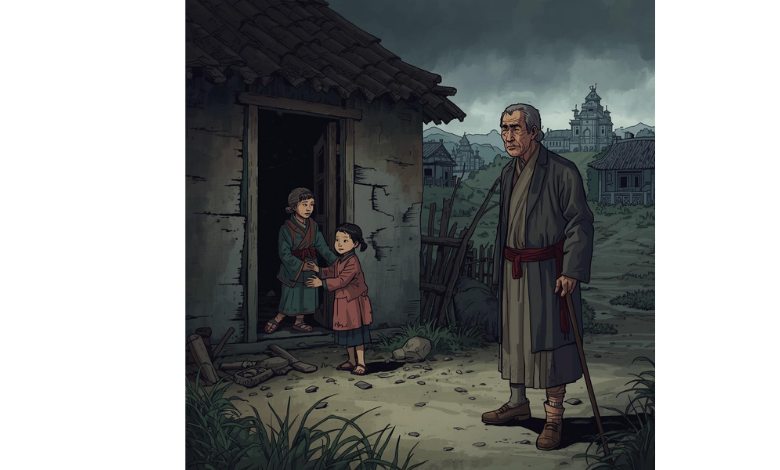
This play is the reflection of the life of poor people and their fate in the pre-revolution China (e). There are only three characters; an old man, a girl and a passer-by. The background of the setting reflects faded (human civilization; graveyard, faint track, dead tree etc (a). Near a hut at late afternoon, the girl and the old man appear, and meanwhile a passer-by arrives hurriedly and predicts ‘I may never reach the end’. He is anxious to get to the destination but the path ahead is much difficulty. His feet are bleeding and the girl gives him cloth to bandage the bleeding feet.
The old man asks the girls to help him, but not other things because she has ‘nothing else does worth looking at’ and the person who comes at sunset can do nothing. But the girl sees the passer-by coming near. The passer-by is about 30 to 40 with black moustache and shabby shoes. She looks at him and thinks he is a beggar. He comes to the old man, greets him, and asks a cup of water. The old man tells him to sit and calls the girl to bring water. The passer-by says that he does not know his own name, and he has not been called by the same name twice. He explains that he even does not know from where he came, he has been walking since he could remember, walked a long way and arrived there.
The girl brings water for him; he drinks, thanks her and becomes speechless. He has never met such kind people before. The passer-by wants to ‘go ahead’ and asks old man about the way ahead. The old man says that there are graves ahead but the girl says there are ‘roses and lilies’ ahead and she sometimes goes there to play. He asks the old man to say what beyond the graves are. The old man says that he has visited these places and advises the passer-by to go back because he will never get to the destination / end of the journey but he denies and says that if he goes back he is in the place without any celebrity / any landlord / any smiles and he hates them. So, he cannot go back. There is no one to give compassion. There are only tyrants, dictators and they never value his feelings. That place is not for good people.
The passer-by says a voice ahead him is inspiring him, calling him and he cannot rest although he has lost his much blood. He needs blood but he has much water in his body. The old man still persuades him to take rest because of sunset, the passer-by because the vice is calling the old man for a long time, not to the passer-by. But the old man has always ignored the voice. But the passer-by wants to continue the journey; the girl brings cloth to bandage his wound. The passer-by thanks the girl saying ‘Really such kindness is rare’ and binds his ankle and thanks her but the old man comments ‘No need to thank her; it won’t do you any good’. He thinks it is absurd to ahead and he got the ‘alms’, the girl’s ‘piece of cloth’. He gives it back to the girl, but she refuses to take it, the old man still tells him to take rest to go ahead, nor can carry anything. But he insists to go ahead, thanks them, bids good bye handing over the piece of cloth to the girl but she refuses. The old man tells him to throw it away, or hang on the roses or lilies. The old man bids him good bye, calls the girl to help him go in. the passer by thanks both of them, blesses for peace, and goes out to the wilderness .
This play presents the idea the journey of life; the old man’s philosophy, which is never ending. We never get to the destination, we just continue it. Nor we are aware of ourselves about the past and the future. Life is victim of alienation. The society is decayed, corrupt and tyrant (d). The old man likes to avoid them (celebrities and landlords and cages for the poor) (f,g).