M.K. Gandhi
Summary
Or, Answer the following questions
Gandhi is bringing a nostalgia of his own past about stealing and atonement about his deeds. He says that he is unable to say when he ate meat. But he can say that he was fond of smoking although he had sense of bad effects of smoking. But he imagined pleasure in it (a), his uncle would smoke but he could not copy because of the lack of money. So, they would pilfer (steal) stumps of his uncle’s cigarettes. Yet they couldn’t smoke out of stumps and began to steal coppers from the servant’s pocket money to purchase cigarettes (b). They had problem to store them, they couldn’t buy from elders and managed it for few weeks. Then, they began to smoke out of porous bringing from the jungle (c).
These things could not give him satisfaction. He longed independence, smartness and did not want to live on elders’ permission. So, he thought to commit suicide. It was difficult to commit suicide. They took Dhatura seeds as poison and went to Kedarji Mandir, put ghee in the temple-lamp, had ‘darshan’ and looked for a separate corner. They rethought about dying, yet swallowed two / three seeds but dared not to take more. They felt shy and went to Ramji Mandir to sismiss the thought of suicide. Then, he realised that it was not easy to commit suicide and gave up this idea. Stealing coppers and smoking stumps resulted in the thought of suicide (d).
He grew up but never thought of smoking, rather regarded smoking as ‘barbarous’ , dirty and harmful. And he cannot go to the places where people smoke, he feels choked (e). Moreover, he started to feel guilty more in this incident than his stealing coppers at 12 or 13 (f) because it was more immoral.
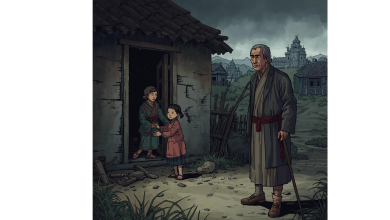
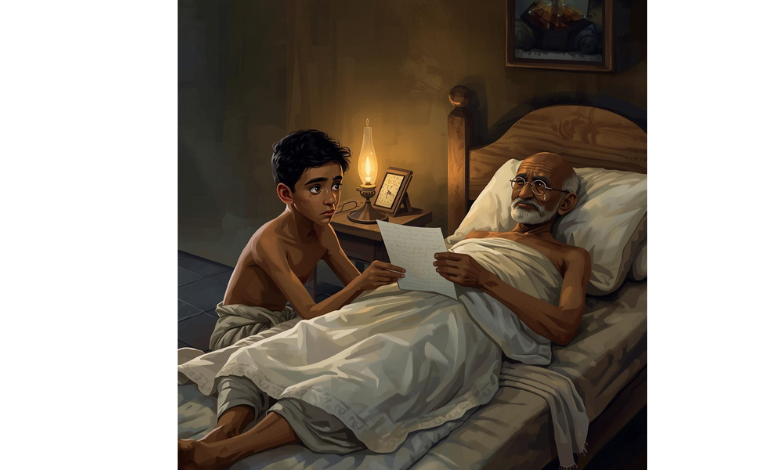
When he was 15, he made another theft from his meat-eating brother’s gold armlet to clear the debt of twenty-five rupees. And later he thought to confess his crime to his father but dared not for being punished. At last, he decided to write the confession to his father (g,i); who was suffering from fistula and was in the planks bed and was crying (h). Father tore it after reading it, cried and lay in the bed. Gandhi felt his heart cleaned, saw his father’s love and the lesson of ‘Ahimsa’ (non-violence) which is proved by the hymn (j). He thought the power of non-violence; its all- embracing. This forgiveness was wonderful. He had thought that his father would be angry and strike him, but he was wonderfully peaceful for the son’s clean confession. His confession made his father feel safe about his son and increased his affection to his son; means Gandhi.