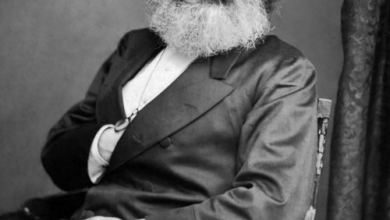
– Guy de Maupassant
Brief plot
- Pretty Matilde Loisel aspires to the wealth and prestige of the upper classes, and is frustrated by her lower-middle- class husband and plain surroundings.
- Her husband finagles an invitation to one of the wealthy parties Matilde longs to attend, and when Matilde refuses, saying she has nothing to wear, he helps her purchase an expensive dress.
- Matilde is frustrated by her lack of jewelry; she borrows an extravagant diamond necklace from her friend Madame Forestier.
- Matilde has a wonderful time at the party, but afterward discovers the diamond necklace is lost. The couple spends their inheritance and take out loans to replace it.
- After years living in penury and debt that ruin Matilde’s looks, Matilde runs into Madame Forestier, to whom she confesses the whole story; Madame Forestier, deeply moved, tells her the necklace was a fake.
Summary
Matilde Loisel is an attractive and pretty, but very unhappy woman. She believes that life has played her false role, feels relegated to a lower station than she deserves. She wanted to be appreciated and loved by some rich gentleman from a good family, but instead, having no dowry, she had to settle for a junior clerk in the Board Education. She frustrates, she hates her plain apartment, its absence of pictures on the walls, its poor furniture. Doing housework, she fills her with hopeless regrets and provokes . And sweeps the house.
Matilde is so humiliated by her lower-middle-class existence that she even refuses to see one of her old friends. Madame Forestier is wealthy, and Matilde finds visits to her too painful to bear. So, she spends her days hanging around her drab flat, sometimes crying, overcome with worry, regret, desperation, and distress (a, b).
Her husband, on the other hand, seems better adjusted. When he is served a simple casserole, he can exclaim with pleasure: “Well, a good hot-pot. I don’t know anything better than that.”
One day, he comes home from his office with an invitation to a party that is being given by his superior, the minister of public instruction. Instead of greeting the news with delight, Matilde throws the invitation down on the table, saying that it is no good to her, because she has nothing suitable to wear for such an occasion. Her husband tries to convince her “You will see the whole world of officialdom there,” he says, suggesting that she wear that good-looking dress she once wore to the theater. She refuses and tells him to give the invitation to a colleague whose wife is better turned out than she (c).
Monsieur Loisel tries another tack . trying to estimate, what an old pinchpenny (poor) like him would be willing to spend. She decides on the sum of four hundred francs (d)that is exactly the amount that he has put away to buy himself a gun so he could join some friends who go Sunday lark-shooting on the Nanterre flatlands. He is not happy to forgo (neglect) his pleasure but agrees.
An appropriate dress is ordered and is ready before the date of the dance. Matilde, however, is still depressed. Now she complains that she does not have any jewelry to wear with it. Her husband suggests flowers. She is unimpressed. He then suggests that she go to her rich friend Madame Forestier and borrow some jewelry (e). His wife thinks it a good idea and the next day goes to Madame Forestier. She tells Matilde to take what she likes.
Such an embarrassment of riches makes it difficult for Matilde to make up her mind. She discovers a black satin case that contains a magnificent necklace, “a river of diamonds.” With tremulous voice she asks if she may borrow this item (f). “But yes, certainly,” says her friend. Matilde throws her arms around her friend’s neck, and then joyously hurries home with her treasure.
At the minister’s party, Matilde scores a success. She appears to be the prettiest woman in the room; all men’s eyes are on her. Even the minister notices her. She dances throughout the night. When the party breaks up at four o’clock, Matilde wants to get away as fast as possible because she does not want the other women, who all wear furs, to notice her plain cloth coat. She runs out to the street hoping to find a cab, her husband finds an old dilapidated brougham stationed along the embankment . The ride back to their dismal apartment is sad for Matilde with her fresh memories of her triumph.
Once home, as she is taking off her wraps, she discovers that the necklace is no longer around her neck (g). They search her clothes: nothing. Her husband goes out and retraces their path home. He returns several hours later having found nothing. The next day, he goes to the police and files a report. He then advertises in the lost-and-found in the papers, but still, nothing (h). To give them time to continue the search, they tell Madame Forestier that the clasp (hold) on the necklace is being repaired. After five days, however, when nothing shows up, they decide that the necklace is truly gone and they must have it replaced.
They take the necklace case from jeweler to jeweler to find a strand of diamonds that matches the one lost. They finally see one in a shop at the Palais-Royal (i). The price, with a four-thousand-franc discount, is thirty-six thousand francs. The Loisels pay for it with an eighteen-thousand-franc inheritance that the husband has received from his father, and by borrowing the rest in small amounts, thereby mortgaging their lives for the next decade. The replacement necklace is returned to Madame Forestier, returned, but Forestier does not bother to open the case.
The Loisels are left with their debts. They get rid of their maid. They move to a poorer apartment. The wife now has to do all the menial work herself: wash the sheets, carry garbage down to the street, carry up the water, do her own shopping, bargaining with everybody to save a few sours. The husband moonlights, working in the evenings for a bookkeeper and often at nights, doing copying at twenty-five centimes a page. This goes on year after year (j) until the debt is paid. The time of penury has transformed Matilde into a poor, old, with a loud voice, red hands, and neglected hair, but in her misery she often remembers the minister’s ball (dance), where she had her great success.
One Sunday, as she strolls (walk) along the Champs-Elysees, she sees Madame Forestier taking a child for a walk. Jeanne Forestier is still young-looking and attractive. Now that the debt for the necklace has been satisfied, Matilde Loisel decides to tell her old friend everything that happened. She stops to speak to her but is not recognized until she introduces herself (k). She explains that life has been pretty grim (serious) . She tells her about the lost necklace; how she had it replaced and for the past ten years has been slaving to pay for it. She is relieved that the long ordeal (bad experience) is over, and naïvely proud that her friend never knew that a different necklace had been returned to her. Madame Forestier is deeply touched. Taking both of her friend’s hands she says, “Oh! My poor Mathilde! But mine was a fake. It was worth no more than five hundred francs!”