Robert C Holub
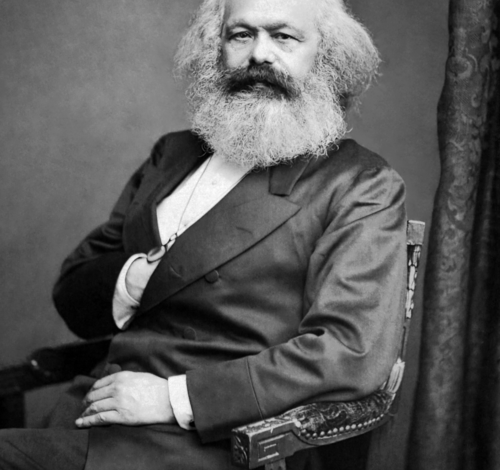
Karl Marx was born in the Jewish family in 11818 May 5. His father was a lawyer and changed religion and became a Christian. This incident affected him much and stood against religion. He did not directly studied literature, but affected literary thought a lot (a).
Karl Marx is not a literary writer but his theory has attracted literature a lot. There were much Marxist readings in the twentieth century. His earlier writings were religious issues seeking emancipations and stood against religion (d). He focused that literature is never autonomous, it represents ideological statements to enhance social struggle against bourgeois by the proletariats
(b). His preliminary writings were against religion, Jewish emancipation, that emancipation is impossible through only religious and political arena, but through the total human emancipation, radical refashioning of the total social order (i). Religion is opium according to him because it diverts our mind to the afterlife and keeps away from the real world. Such fantasy is against proletariats and their struggle for their supremacy. So his views are different from others (c).
Marx criticizes capitalism and its private mode of production of commodities to exchange in the market in which the bourgeoisie makes more profit exploiting the labour but the labour gets nothing except lower wages. When the workers realise they are exploited, then they start struggle to overthrow the bourgeois. Marx’s philosophy is to promote proletariats’ struggle, and it will replace the capitalist mode of production and it will turn to collective mode of production known as ‘communism’ . He defines ideology, alienation and fetishism in the ‘Manifesto of the Communist Party (h)’ Ideology is socially constructed idea to implement in the society. It is a thought that people believe it, accept it and follow it in emotion. It stimulates people powerfully. Marxist ideology is historical and material conditioning because the labours are exploited and the capitalists make more profit. Ideology is the result of material class conflict and it in the interest of ruling class. Other ideologies are repressive but Marxist ideology is ‘non-repressive’ because other ideologies like American dream, religion, sexism, patriotism, consumerism all exploit people. People must work for the proletariats.
Alienation, according to Marx, is the condition of workers in which they are isolated from the self, from the work and from other workers. They lose self- worth, self-identity and other aspects of life. They lose personal satisfaction and benefits. They work for others but they do not have access to economic stream due to the privatization. The workers have no participation in the sharing profit, only work for survival, and lose human dignity. The workers’ condition gets worse and they struggle against the owners / capitalists. This distance between the workers and the owners creates never-ending struggle to overthrough the capitalism (e, f).
Fetishism is the public attraction on goods or prestige in which people sacrifice anything for money through which they can buy the goods and get highest satisfaction to impress others through ‘sign exchange value’. The capitalists limit the wages of the workers and they earn more profit and buy other goods to impress others. They have power to set the poor wages of the workers, and accumulate more money by selling the goods at high prices making much gap between the production costs and selling price and create ‘surplus value’. When people start to understand the meaning of economic reality; how this production is made and how profit is made, then people understand how this product is made and in which price it has to be here. But people do not try to see find out this truth and get fascinated in them. Marx questioned it. Marx issued ‘The Manifestoof the Communist Party’ in 1848 which analysed the nature of the rulers and the ruled and he explained why the proletariats struggle against the bourgeois and it must be supported. Literature, culture and all human activities must work for the establishment of the proletariats supremacy (j).